
Southeast Asia Extreme Working Conditions Field Study: Dedicated PTO Drive Shaft System for Tractor Log Splitters
Engineered for high-humidity tropical environments, dense hardwood splitting, and high-intensity hydraulic pump actuation. Proudly manufactured by Zhejiang Jiukai Drive Shaft Co., Ltd.
Core Technology Quick Read
In the Southeast Asian logging and agricultural sectors, tractor-driven log splitters face tremendous reverse impact forces due to the high density of tropical hardwoods like rubberwood and teak. Traditional drivelines often suffer from rapid cross journal wear or plastic shield embrittlement under extreme UV exposure. EVER-POWER has completely reconstructed the PTO drive shaft specifically for the kinematic demands of high-pressure hydraulic pumps. Operating seamlessly within the 540 RPM to 1000 RPM range, our powertrain system consistently transmits peak torque loads up to 2450 Nm. By utilizing 20CrMnTi alloy steel undergoing precise carburizing and quenching, coupled with an anti-aging, UV-resistant safety guard, our shafts maintain near-zero radial runout even after 2000 hours of continuous hydraulic actuation.
Rated Power Transmission
35 HP – 120 HP
Perfectly matched to rear tractor splines
Peak Torsional Limit
2,450 Nm
Absorbs severe log-splitting kickback
Safety Guard Standard
CE & ISO 5674
Fully enclosed, self-lubricating HDPE
U-Joint Lifespan
> 2,000 Hours
High-temp polyurea grease lubricated
ASEAN Powertrain Compliance & Industry Insights
The mechanization of agriculture and forestry is rapidly accelerating across the ASEAN region. Driven by timber processing, palm plantation renewal, and the biomass energy sector, the demand for tractor-driven log splitters is surging. However, the region’s extreme ambient temperatures (often exceeding 35°C) and oppressive humidity (up to 95%) impose brutal requirements on the anti-corrosion properties and grease sealing of powertrain components.
Mandatory Regulatory Requirements: According to the ASEAN Agricultural Machinery Safety Guidelines, alongside specific import inspection standards in Vietnam and Thailand (TISI), all equipment driven by a Power Take-Off must feature a rotating safety shield compliant with ISO 5674, complete with anti-rotation restraint chains. Bare shafts lacking full-coverage shielding are strictly prohibited from entering government agricultural subsidy catalogs across multiple member states.
Our entire log splitter driveline series is equipped standard with an advanced high-molecular-weight polymer anti-aging shield. The tube wall thickness has been increased by 20%, ensuring full compliance with Malaysia’s SIRIM certifications while providing absolute operational safety for the end-users.

Powertrain Matrix: Dynamic Operational Principles in Log Splitters
The core mechanical logic of a tractor-mounted hydraulic log splitter relies on converting the rotational kinetic energy of the tractor’s engine into the linear piercing force of a hydraulic cylinder without loss. Within this powertrain matrix, the PTO drive shaft acts simultaneously as a critical power bridge and a vital shock-absorbing buffer.
- Power Source Engagement: The front splined yoke connects directly to the tractor’s rear PTO stub (typically a 1-3/8″ 6-spline specification), drawing out raw rotational power at 540 RPM.
- Angular and Telescopic Compensation: Because log splitters are often mounted via a 3-Point Hitch, raising, lowering, and traversing uneven terrain constantly changes the angle and distance between the tractor and implement. Our universal joints (U-joints) permit dynamic deflection angles up to 45 degrees, while the telescopic slip tubes (Lemon or Triangular profiles) expand and compress smoothly under load, preventing driveline bind.
- Speed to Pressure Conversion: The rear end of the shaft does not drive the splitting wedge directly. Instead, it couples with an agricultural gearbox. This gearbox multiplies the 540 RPM input to over 3000 RPM, rapidly driving the hydraulic gear pump to build hundreds of bars of fluid pressure.
- Overload Protection Mechanism: When a wedge strikes an impenetrable wood knot, stalling the hydraulic system and sending a massive reverse shockwave toward the tractor, the shaft’s built-in Shear Bolt yoke instantly intervenes. The bolt cleanly shears under extreme torque, decoupling the driveline and saving the expensive tractor transmission and the aluminum hydraulic pump from catastrophic casing fracture.
25 Core Engineering Parameters: Log Splitter Drive Shafts
The proprietary data below outlines the specific technical specifications of our heavy-duty shafts dedicated to hydraulic splitting. Every dimensional tolerance and torque rating can be custom-machined to match your specific hydraulic pump bracket and tractor class.
| Category | Engineering Parameter | Standard Values / Custom Range | Application Significance for Splitters |
|---|---|---|---|
| Geometry & Dimensions | Series Classification | Series 4 / Series 5 / Series 6 | Matched to 35HP up to 80HP prime movers |
| Overall Closed Length | 800 mm – 1200 mm (Adjustable) | Accommodates various 3-point hitch clearance depths | |
| Tractor Yoke End | 1-3/8″ 6-Spline (Z6), Push Pin | Standard global agricultural PTO interface | |
| Implement Yoke End | 1-3/8″ Z6 / Round Bore with Keyway | Connects to gearbox input or direct hydraulic pump shafts | |
| Cross Journal Dimensions | 27.0 x 74.6 mm (Series 4 baseline) | Core pressure point dictating maximum torsional capacity | |
| Slip Tube Profile | Lemon Profile / Triangular Profile | Provides superior torsional rigidity against deformation | |
| Outer Tube Wall Thickness | 3.4 mm – 4.5 mm | Resists bending forces during heavy resonance | |
| Inner Tube Wall Thickness | 4.0 mm – 5.5 mm | Ensures tight nesting, minimizing high-speed radial runout | |
| Dynamics & Performance | Nominal Operating Speed | 540 RPM / 1000 RPM | Precision matched to pump multiplier gearbox inputs |
| Dynamic Torque @ 540rpm | 460 Nm – 1200 Nm | Maintains constant power for 20-40 ton ram pushing forces | |
| Static Break Torque Limit | > 2,450 Nm | Ultimate yield point before catastrophic twisting under lockup | |
| Maximum Articulation Angle | 25° Continuous / 45° Intermittent | Tolerates extreme off-road forest terrain towing | |
| Telescopic Friction Force | Anti-friction coating applied, < 150N | Reduces axial thrust load on tractor internal bearings | |
| Dynamic Balancing Grade | G 6.3 Standard (ISO 1940) | Eliminates destructive harmonics during free-running | |
| Torsional Backlash | ≤ 0.5 Degrees | Instantaneous power response without slop | |
| Efficiency Rating | > 98.5% | Maximizes diesel fuel economy during long shifts | |
| Safety & Hardware | Guard Shield Material | Anti-UV High-Density Polyethylene (HDPE) | Prevents sun-cracking in severe tropical UV exposure |
| Restraint System | Dual Anti-rotation Chains (50kg tensile) | Anchors the guard to prevent hazardous high-speed spinning | |
| Overload Protection Device | Shear Bolt Yoke (SB) | Mechanically severs power exactly at the preset torque limit | |
| Lubrication Zerk Locations | Cross ends + Tube overlap zone | Allows rapid grease gun access without dismantling guards | |
| Locking Mechanism | Heavy-duty Pull Collar option | Enables easy attachment even when wearing muddy work gloves | |
| Metallurgy & Finishing | Yoke Forging Material | AISI 1045 (45# Steel) / Closed-die forged | Guarantees high yield strength without micro-fractures |
| Cross Journal Metallurgy | 20CrMnTi Carburized Alloy Steel | Core toughness combined with HRC 58-62 surface hardness | |
| Sealing Architecture | NBR Dual-lip Seals | Blocks fine sawdust and abrasive mud from destroying needle bearings | |
| Surface Anti-Corrosion | Black Epoxy E-coating | Passes 500-hour neutral salt spray tests, resisting rust |
Engineering Advantages: Eradicating Shaft Failure and Pump Burnout
A log splitter is fundamentally different from a standard rotary tiller. Its load profile is not continuous; instead, it follows a brutal “no-load — rapid pressurization — explosive wood splitting — sudden release” impulse curve. Cheap, substandard PTO shafts instantly reveal fatal engineering flaws under these punishing spikes.
| Critical Failure Point | Inferior Shaft Symptoms | EVER-POWER Engineering Solution |
|---|---|---|
| Pulverized U-Joint Bearings | Utilizes brittle cast iron yokes prone to cracking. Poor sealing allows sawdust infiltration, leading to dry friction and lock-up. | Closed-die forged yokes with 20CrMnTi carburized journals. NBR multi-lip dust seals increase bearing lifespan by over 300%. |
| Severe Tube Torsion | Recycled thin-wall splined tubing twists like a pretzel when hitting impenetrable wood knots, permanently ruining the shaft. | Cold-drawn seamless heavy-wall steel (Triangular/Lemon profile). Torsional yield strength surpasses industry baselines by 40%. |
| Lethal Guard Shattering | Cheap recycled plastics turn yellow and shatter upon touch after a few months of sun exposure, exposing the deadly spinning metal. | Engineering-grade weather-resistant HDPE infused with UV inhibitors, backed by self-lubricating nylon bearings for perpetual free-spinning safety. |
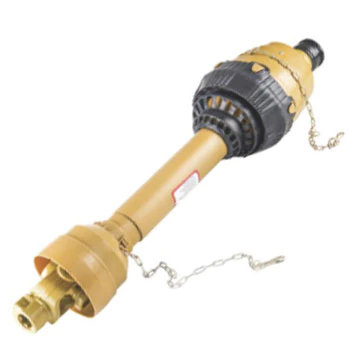
Global Brand Compatibility & Spare Parts Network
In the realm of international heavy machinery maintenance, dimensional standardization is paramount. Our complete line of log splitter PTO shafts is strictly governed by both Euro Standard and North American Standard parameter systems, ensuring exact cross-border interchangeability.
Our PTO drive shaft systems and related components are engineered as a perfect replacement for the driveline units found on Comer Industries™, GKN Walterscheid™, and Bondioli & Pavesi™ original hydraulic log splitters. These high-quality replacement units meet or exceed original specifications in dimensional tolerance and torque capacity.
(Note: All manufacturer names, trademarks, and part numbers mentioned herein are for reference and identification purposes only. EVER-POWER is an independent manufacturer. The products we offer are high-performance aftermarket replacements, not Original Equipment Manufacturer (OEM) parts.)
Whether you are sourcing a single replacement U-joint kit, resilient nylon guard bearings, or a completely assembled shear bolt yoke, our modular catalog allows global repair facilities to reduce total machine overhaul costs by up to 40% without sacrificing an ounce of performance.
Powertrain Selection Summary: 5 Steps to Perfect Alignment
Procuring the incorrect driveline for a hydraulic splitter results in severe vibration, snapped yokes, or dangerous accidents. Utilize this rapid field-check matrix before purchasing:
| Step | Verification Parameter | Measurement & Selection Logic | Typical Splitter Setup |
|---|---|---|---|
| 1 | Prime Mover Horsepower | Verify the tractor manual. This metric dictates the structural rating required—e.g., Series 4 for 35-50HP, or the massive Series 6 for 60-80HP logging rigs. | 40-60 HP mid-size utility tractors |
| 2 | Yoke Interfacing | Tractor side is universally 1-3/8″ 6-spline. Critically measure the splitter side: Is it splined, or a smooth shaft requiring a keyway (e.g., 1-inch bore with 1/4″ key)? | Front: 1-3/8″ Z6 Rear: Direct keyed bore or gearbox spline |
| 3 | Overall Closed Length | Lower the splitter until the PTO stubs are horizontally aligned (the shortest distance). Measure groove-to-groove, ensuring at least 1/3 tube overlap remains when fully extended. | Standard compressed length approx. 1000 mm |
| 4 | Tube Profile Geometry | For the violent shock loads of log splitting, abandon standard splined tubes. Mandate heavy-wall Lemon or Triangular profiles to resist torsional bending. | Heavy-wall Triangular preferred |
| 5 | Overload Intervention | Log splitters absolutely require protection! When the ram dead-heads against solid wood, a Shear Bolt Yoke (SB) on the implement end is essential to decouple power instantly. | Shear Bolt safety device |

Hydraulic Splitters: Targeted Installation Protocol
Execution of proper installation procedures is the first line of defense in prolonging system life and protecting operators. Strictly adhere to these engineering steps:
- Isolation and Alignment: Shut down the tractor engine and remove the key. Actuate the 3-point hitch hydraulics to position the tractor PTO stub perfectly horizontal with the log splitter’s input shaft.
- Measurement and Trimming: If the universal shaft is too long, separate the inner and outer halves. Attach them to their respective stubs. Hold them parallel and mark the redundant length (ensuring a minimum 25mm bottoming clearance). Cut an equal length from both the steel tubes and the plastic shield tubes using a hacksaw. Deburr edges and apply liberal grease.
- Directional Orientation: The end bearing the tractor icon (or simple push-pin) MUST connect to the tractor. The end featuring the Shear Bolt yoke MUST connect to the log splitter. Depress the locking pin, slide onto the splines until a sharp “click” is heard, and vigorously pull back to confirm positive engagement in the annular groove.
- Restraint Chain Anchoring: Clip the anti-rotation chains to stationary points on the tractor chassis and the splitter frame. Allow sufficient slack to accommodate full hydraulic lifting ranges. Never allow chains to wrap around the central shaft body.
- Purge Lubrication and Spin-up: Inject premium lithium complex grease into all U-joint Zerk fittings until fresh grease visibly purges past the bearing lip seals. Start the tractor and engage the PTO at idle, visually confirming the absence of severe vibrations or metal-on-metal interference.
High-Frequency Troubleshooting & Failure Diagnosis
Symptom 1: Violent Equipment Vibration at High RPM
Root Cause Diagnosis: Overwhelmingly caused by incorrect phasing of the inner and outer slip tubes (U-joints are not coplanar) during reassembly. Alternatively, a micro-bend in the steel tubing from exceeding yield strength.
Field Rectification: Detach the shaft, separate the tubes, and align the stamped arrows (ensuring yokes on both ends are perfectly parallel) before reinserting. If a physical warp is visible, the entire tubular assembly must be discarded and replaced.
Symptom 2: Wedge Stalls in Hardwood, but Tractor PTO Keeps Spinning
Root Cause Diagnosis: The implement-side shear bolt has been cleanly severed by a massive reverse peak torque spike. This is the intended mechanical failsafe functioning perfectly.
Field Rectification: Disengage PTO immediately. Rotate the shield back to extract the sheared bolt remnants. Replace only with a bolt of the exact specified grade (e.g., Grade 8.8 metric). CRITICAL WARNING: Never replace a shear bolt with hardened steel pins or Grade 10.9 bolts, as the next pressure spike will detonate the hydraulic gear pump housing!
Symptom 3: Cross Journals Generate Extreme Heat or Grinding Noises
Root Cause Diagnosis: Abrasive sawdust and moisture have defeated the lip seals, entering the needle bearing races. This causes grease degradation, leading to rapid dry metal spalling.
Field Rectification: Remove the cross journal kit. If needle rollers are shattered or the trunnions exhibit deep pitting, replace the entire U-joint immediately. Moving forward, mandate high-pressure greasing every 20-30 operating hours.
Engineer’s Field Notes: 10 Years Validating Extreme Forestry Conditions in Southeast Asia
Perfect theoretical parameters demand verification in the muddy trenches of field application. The following excerpts are extracted from our technical team’s real-world surveying logs and client feedback across the ASEAN region over the past decade.
🇮🇩 Sumatra, Indonesia – Rubber Plantation
Application: High-volume splitting of discarded rubberwood logs.
Condition Pain Point: Ambient humidity hovers near 95% during the monsoon. The heavy sap of rubberwood acts as a corrosive glue on bare metal.
“In our 10 years of servicing timber yards in Sumatra, we found that traditional painted shafts rust rapidly under constant tropical rain, seizing the slip tubes. Based on this field case, EVER-POWER upgraded the entire logging line to a full black epoxy E-coating finish. Client Feedback: ‘After two weeks of sitting in torrential rain, the telescopic tubes glide just as smoothly as day one.'”
🇲🇾 Sabah, Malaysia – Palm Oil Estate
Application: Heavy-duty hydraulic maceration of thick palm trunks.
Condition Pain Point: Palm fibers are incredibly fibrous and dense, causing frequent ‘soft stalls’ that generate violent torsional harmonics.
“Client Pain Point: ‘Our previous shaft tubes twisted like pretzels when hitting palm core fibers.’ EVER-POWER Solution: ‘By switching to our Series 6 heavy-duty triangular profile tube, torsional deflection was eliminated. The plantation manager noted that the immediate hydraulic response even lowered their daily diesel consumption by 5% due to reduced driveline lag.'”
🇹🇭 Chiang Mai, Thailand – Teak Furniture Mill
Application: Stationary tractor-driven hydraulic primary splitting bed.
Condition Pain Point: The extreme density of old-growth teak creates terrifying spike pressures, frequently destroying gear pumps.
“On-site notes: Splitting teak is mechanical warfare. We standardized a precision shear bolt flange yoke for this client. The mill owner stated: ‘Your overload protection is surgically precise. It saved my $800 hydraulic gear pump from cracking, and the UV-resistant shield hasn’t degraded a bit under the fierce Thai sun.'”
🇻🇳 Central Highlands, Vietnam – Coffee Farms
Application: Tractor-mounted portable splitters clearing old coffee bush roots.
Condition Pain Point: Severely undulating hillside terrain forces the driveline to operate at extreme, punishing articulation angles.
“Operating angles frequently exceeded 20 degrees. Our integration of 20CrMnTi alloy U-joints packed with high-temp polyurea grease proved decisive. The local Vietnamese distributor reported: ‘In these hills, the EVER-POWER shafts outlast local generic brands by at least a full year. The farmers trust this robust engineering.'”
🇵🇭 Mindanao, Philippines – Logging Camps
Application: Rapid processing of massive fallen timber following severe typhoons.
Condition Pain Point: Equipment is stored outdoors year-round. Salty ocean winds rapidly corrode exposed metals and shatter plastics.
“The maintenance chief in Mindanao confirmed: ‘Salty sea air turns cheap plastic shields to dust in three months. But the EVER-POWER anti-UV HDPE guards remain pliable 18 months later. During continuous, grueling typhoon recovery operations, we didn’t experience a single hour of downtime due to powertrain failure.'”
Technical Knowledge Repository: 10 Core Powertrain Questions Answered
1. Should I run my log splitter shaft at 540 RPM or 1000 RPM?
This strictly depends on the input rating of the multiplier gearbox attached to your hydraulic pump. Over 85% of utility tractor log splitters are geared to accept a 540 RPM input, which the internal gears multiply to approximately 3000 RPM for the pump. Supplying 1000 RPM to a 540 RPM-rated gearbox will instantly over-pressurize and detonate the hydraulic system.
2. Why does my shaft vibrate violently when the wedge bites into hard teak?
Violent shaking is indicative of torsional resonance. This occurs when you utilize inferior thin-wall splined tubing lacking sufficient torsional rigidity. As the wedge encounters massive resistance, the weak tube literally winds up and snaps back microscopically. Upgrading to a heavy-wall triangular profile eliminates this harmonic distortion.
3. Can I use a Slip Clutch instead of a Shear Bolt for a log splitter?
While slip clutches are excellent for rotary tillers, they are highly discouraged for high-pressure hydraulic splitters. When a hydraulic ram dead-heads, a slip clutch may continue to friction-slip, generating immense heat without fully cutting power. A shear bolt provides an absolute, instantaneous decoupling, which is far safer for fragile aluminum gear pumps.
4. If my new driveline is too long, is it safe to cut it with a saw?
Yes, this is standard industry practice. You must measure the required working length and cut equal amounts from both the inner and outer steel tubes, as well as their corresponding plastic guards. Ensure that when the shaft is fully extended in operation, at least 1/3 of the tube length remains overlapped to prevent decoupling.
5. What is the precise greasing interval for the U-joints in dusty forestry conditions?
In the high-humidity, high-dust environments of Southeast Asian logging camps, we mandate purging the U-joint Zerks with high-quality NLGI #2 lithium complex grease every 20 to 30 operating hours. Inject grease until the old, contaminated lubricant is visibly pushed past the lip seals.
6. How should the restraint chains on the plastic shield be properly secured?
The restraint chains hold the outer plastic guard stationary while the steel shaft spins inside at 540 RPM. Anchor them to designated non-rotating points on the tractor chassis and implement frame. Ensure enough slack remains to allow raising and lowering the 3-point hitch. Never wrap the chain tightly around the shaft itself.
7. From an engineering perspective, what separates a “Series 4” from a “Series 6”?
These series designate the physical size and torque capacity of the components. A Series 4 typically utilizes a 27.0 x 74.6 mm cross journal suitable for 35-50 HP. A Series 6 upgrades to a massive 30.2 x 92 mm cross and significantly thicker steel tubing, engineered to withstand the colossal torque generated by 60-80 HP tractors.
8. Do independent engine-driven tow-behind splitters require these telescopic shafts?
Generally, no. Self-contained splitters with their own small gasoline or diesel engines usually direct-couple to the hydraulic pump via a jaw coupling. The heavy-duty telescopic drivelines discussed here are specifically engineered to bridge the gap between large agricultural tractors and 3-point hitch mounted implements.
9. Will the plastic safety covers shatter after a year in the tropical sun?
Our engineered shields will not. Unlike cheap recycled plastics that suffer rapid photo-degradation, our guards are molded from virgin High-Density Polyethylene (HDPE) heavily doped with advanced Anti-UV stabilizers. They retain their impact elasticity for years, even under the direct equatorial sun.
10. How do I identify the exact connection type on my splitter’s hydraulic pump side?
Inspect the input stub. If it features six distinct raised ridges, it is a standard splined interface (e.g., 1-3/8″ Z6). If it is a perfectly smooth cylinder featuring a single long slot milled into it, it requires a Round Bore with Keyway yoke. Providing calipers measurements of this diameter guarantees a flawless custom fit.
Core Synergistic Powertrain Matrix: In-Depth Anatomy of Agricultural Gearboxes
When analyzing power transmission within modern forestry machinery, the high-strength PTO drive shaft is merely the “artery” routing raw kinetic energy from the tractor engine. The true “heart” of the system—the component responsible for multiplying that slow, massive torque into the high-frequency speed required for lethal hydraulic piercing force—is our synchronously developed, high-performance Agricultural Gearbox. By exploring our dedicated agricultural gearbox portfolio, engineers will discover that this seemingly simple cast-iron housing encapsulates the highest echelons of fluid dynamics, metallurgy, and precision CNC machining.
Within the architectural framework of heavy-duty log splitters, the tractor’s rear power take-off output is universally governed to rotate at a sluggish 540 RPM. However, for a hydraulic gear pump to efficiently generate up to 250 Bar (3600 PSI) of internal fluid pressure—enough to command a cylinder to exert 20 to 40 tons of pushing force—its internal gears must rotate at an optimal speed band of 3000 RPM to 3600 RPM. This creates a massive kinetic disparity. To bridge this dynamic chasm, EVER-POWER engineers design and manufacture specialized multiplier gearboxes for hydraulic pumps, featuring precise step-up ratios of 1:3 or even 1:3.8. Rigidly bolted to the splitter’s input chassis, one end accepts the massive low-end torque from the driveline at 540 RPM. Internally, a meticulously hobbed helical or spur gear train meshes to amplify the velocity, while the output end couples seamlessly via a splined sleeve directly into the aluminum hydraulic pump shaft.
Metallurgy and Heat Treatment Protocols Under Punishing Loads: Surviving hundreds of Newton-meters of input torque, combined with the catastrophic reverse-shockwave generated when a steel wedge dead-heads against an impenetrable teak knot, requires extraordinary material science. Our internal gearsets are never merely machined from standard billets. We exclusively mandate the use of 20CrMnTi, a premium alloy steel celebrated for its supreme tensile strength. Following high-precision CNC gear hobbing and shaving, every single gear enters a controlled-atmosphere multi-purpose furnace for deep carburizing and quenching. Carbon atoms diffuse deeply into the gear flanks, skyrocketing the surface hardness to HRC 58-62—rendering them as scratch-resistant as diamonds. Crucially, the core of the gear remains ductile (HRC 30-40), possessing exceptional impact absorption capabilities. This “hard-shell, tough-core” architecture ensures that even when the hydraulic system hits peak bypass relief pressure while splitting 60cm diameter rubberwood logs, catastrophic tooth breakage is entirely averted. When paired with our G 6.3 dynamically balanced drivelines, the Noise, Vibration, and Harshness (NVH) levels of the entire assembly are suppressed to industry-leading standards.
Sealing Architecture and Thermal Topologies for Tropical Latitudes: Nations such as Indonesia, Malaysia, and the Philippines lie deep within the tropical rainforest climate zone, shrouded in perpetual 35°C heat and 90% humidity. If a gearbox lacks hermetic sealing or efficient thermal dissipation in these environments, ambient moisture rapidly infiltrates, emulsifying the internal gear oil into a useless milky foam. This destroys the hydrodynamic film, leading to instantaneous bearing seizure. To combat this, the housing of an EVER-POWER agricultural gearbox is monoblock-cast from HT250 high-strength gray iron. Using topological optimization software, we cast extensive cooling fins across the exterior to maximize the heat rejection surface area. At the critical bearing leak paths, we spare no expense, integrating dual-lip FKM (Fluoroelastomer) oil seals fortified with dust-exclusion skeletons. These aerospace-grade seals maintain superb elastic conformity even when internal oil temperatures spike to 150°C, perfectly repelling monsoon downpours and acidic mud splatter, thus preserving the absolute purity of the ISO VG 150 heavy-duty gear oil inside.
Beyond raw mechanical dominance, we inject profound “field-engineer psychology” into the user-experience details. All input shafts connecting to the PTO feature protective steel cones, preventing tall grass and abrasive sawdust from wrapping around and shredding the lip seals. For maintenance, the upper casing houses an anodized aluminum filler plug integrated with a micro-porous breather valve, expertly balancing extreme internal barometric pressure shifts. The mid-case features a borosilicate sight glass, allowing farm operators to instantly verify oil levels and viscosity degradation visually, without turning a wrench. Finally, the lower drain incorporates a high-gauss magnetic plug, continuously sweeping the oil bath to capture microscopic ferrous shavings generated during the initial break-in period. This “long-life, low-touch” design philosophy drastically slashes post-sale labor costs for our international dealer network.
The 10-Year Factory Validation Narrative: Over the last decade, we haven’t merely supplied OEM components; we have aggressively pursued field diagnostics to correct systemic industry failures. Consider a high-profile retrofit we executed for a massive teak processing facility in Northern Thailand. The client originally utilized a makeshift V-belt and pulley system to multiply speeds. However, in the suffocating tropical humidity, the belts constantly stretched and slipped. The hydraulic rams lost pushing force, splitting efficiency plummeted, and snapping belts frequently endangered workers. We deployed our engineering team to the site, completely stripping the belt drive. We replaced it with a direct mechanical linkage: an EVER-POWER Series 6 drive shaft coupled straight into a 1:3 enclosed agricultural gearbox. The driveline lag vanished instantly. The zero-slip enclosed gear transmission ensured the hydraulic pump received 100% volumetric flow without hesitation, violently increasing the mill’s daily lumber yield by 40%. The facility manager documented the transformation in their operational logs: “Abandoning belts for enclosed mechanical gearboxes was the most lucrative engineering pivot we’ve made in the jungle. The immediacy of the torque transfer is unparalleled. EVER-POWER’s integrated powertrain solution dropped our mechanical failure rate from weekly emergency shutdowns to near-zero.”

Related Powertrain Components & Peripherals
Beyond our flagship shafts and gearboxes, we manufacture a comprehensive suite of precision kinetic transfer components to support the entire agricultural and forestry mechanization ecosystem.

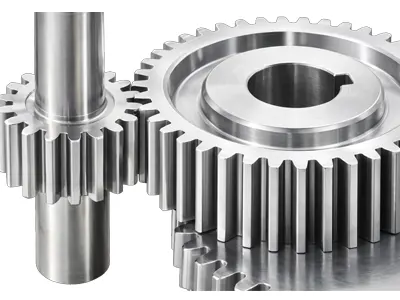


Source Manufacturing: The Ultimate Guarantee of Quality and Delivery
Operating a massive, modernized manufacturing base. From the cold-drawing of raw steel tubes and closed-die forging of yokes to automated robotic painting, in-line dynamic balancing, and final assembly, we command the entire lifecycle of powertrain production. We bypass middlemen markups entirely to deliver raw engineering value.

Transcending Standard Catalogs: Accepting Global Custom Engineering
Not every farm or machinery manufacturer’s demands fit into a standardized brochure. Zhejiang Jiukai Drive Shaft Co., Ltd. wields formidable frontline R&D and physical manufacturing capabilities. Whether you require extraordinarily long telescopic strokes, non-standard splined yokes for specialized hydraulic motors, or proprietary anti-corrosion chemical coatings, our field engineers can execute mold-making and mass production based purely on your drawings or physical samples. Do not compromise; forge a bulletproof heart for your log splitting equipment.
Submit Technical Drawings for a Custom Quote
Or navigate back to our homepage to explore an extensive array of industrial kinetic transfer solutions.