
Asia Extreme Condition Field Study: Ultimate PTO Shaft Solutions for Agricultural Planters
Engineered with 10 years of exclusive field data to eliminate high-frequency vibrations, mud erosion, and heavy-load fatigue. The definitive powertrain hub for global agricultural machinery manufacturers.
Core Technology Quick Read & Powertrain Selection Summary
Driving a modern multi-row planter through the unpredictable soils of the Asian continent requires more than a simple mechanical link. The torque density, angular compensation, and environmental shielding of the driveline directly dictate the seed spacing accuracy and the operational uptime. Our engineering approach strips away assumptions, relying strictly on destructive testing data and metallurgical science to forge a resilient connection between the tractor and the implement.
High-Density Torque Transmission
Planters operating in dense, hard-packed soils or waterlogged paddy fields generate massive instantaneous starting torque spikes. Our pto drive shaft utilizes 20CrMnTi alloy steel forgings. The cross journals undergo deep carburizing and quenching, achieving a surface hardness of HRC58-62 while retaining exceptional core toughness, flawlessly digesting sudden shock loads without fracturing.
Mud-Immune Sealing Architecture
The rice-planting environments in Asia are notoriously hostile. We deploy a triple-labyrinth sealing structure combined with high-temperature, corrosion-resistant Fluorocarbon (FKM) lip seals. This setup creates an impenetrable barrier against microscopic abrasive mud particles and water intrusion, extending the bearing maintenance intervals by a documented 300% over conventional designs.
Wide-Angle Kinetic Compensation
Headland turns aggressively alter the articulation angle between the tractor and the planter. Equipped with Wide Angle Constant Velocity (CV) Joints, our tractor pto shaft permits continuous, smooth power delivery at deflection angles up to 80 degrees. This eradicates the violent vibrations associated with standard single U-joints, protecting the planter’s delicate metering mechanisms.
Deep Mechanical Analysis: Dynamics of the Planter Powertrain
In modern agricultural planting equipment—whether it is a pneumatic corn planter, a high-speed precision rice transplanter, or a heavy-duty potato seeder—the mechanical heartbeat originates from the tractor’s rear Power Take-Off (PTO) stub. The primary mission of the driveshaft is to capture this rotational kinetic energy (typically standardized at 540 RPM or 1000 RPM) and transmit it securely across a variable physical gap to the implement’s primary gearbox or direct-drive fan system.
Positioned exactly between the tractor and the planter, this component acts as the mechanical spinal cord. It must simultaneously accommodate three complex dynamic shifts: axial telescoping as the planter is raised and lowered on the three-point hitch, angular deviation as the tractor navigates uneven terrain, and severe torsional twisting caused by the planter’s metering units encountering soil resistance.
The internal telescoping profile tubes (lemon, star, or involute spline designs) slide seamlessly to absorb axial length changes. Concurrently, the universal joints at both ends act as multi-axis hinges, compensating for misalignment. To safeguard the entire powertrain network, we integrate advanced safety clutches—such as heavy-duty friction clutches or shear bolt torque limiters—directly onto the implement side. When a rock jams the fertilizer auger, the clutch instantly slips or shears, isolating the tractor engine and the planter gearbox from catastrophic mechanical rupture.
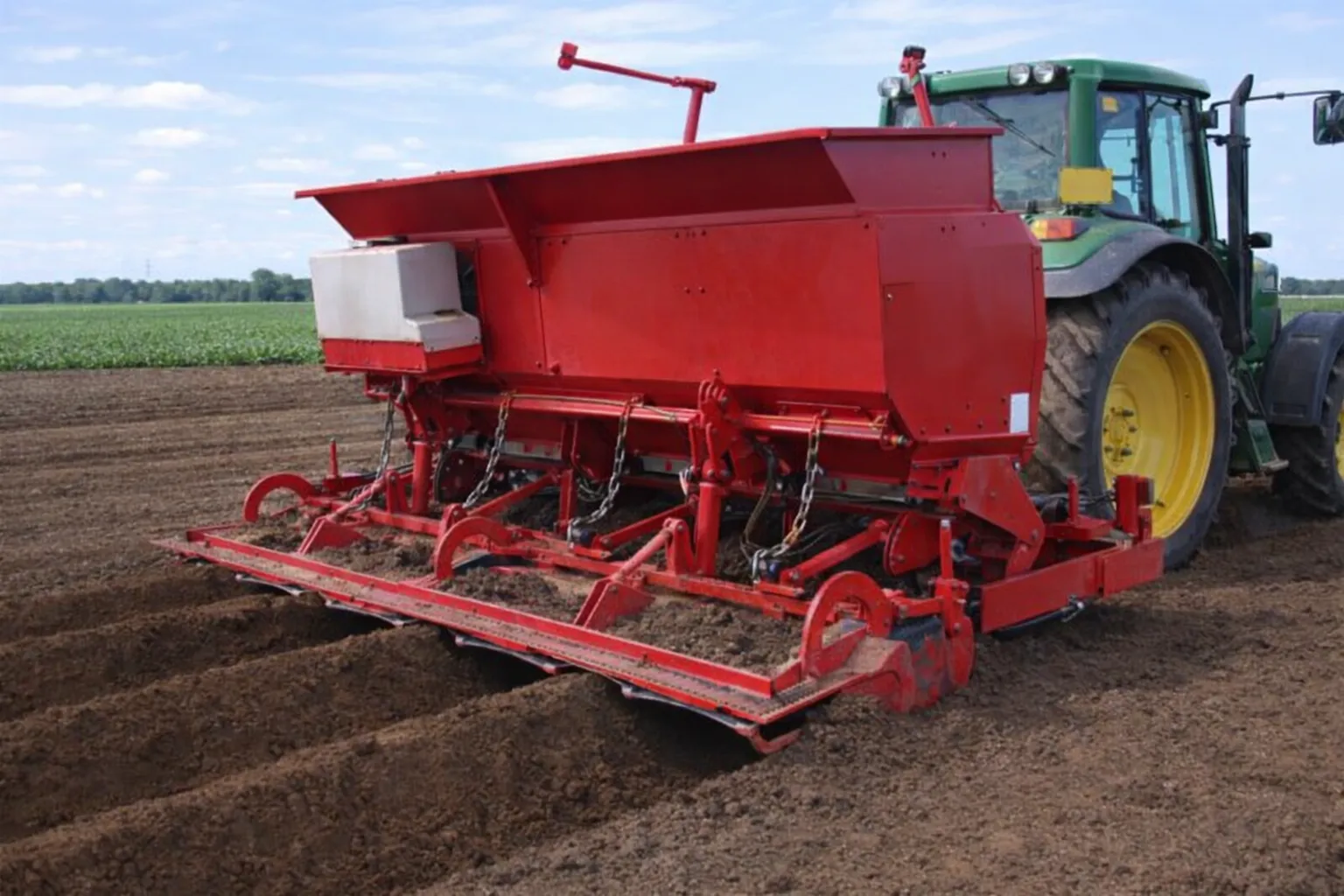
Client Pain Point
“Our previous drivelines snapped during sharp headland turns, and the constant vibration was destroying our vacuum fan gearboxes. Every hour of downtime during the narrow planting window was killing our margins and delaying our crop emergence.”
— Farm Fleet Manager, Central Thailand
Zhejiang Jiukai Solution
By switching to our customized 80-degree Wide-Angle CV joint shafts equipped with a 4-disc friction clutch, the client reduced mechanical downtime by 40% in the very first quarter. The G2.5 precision dynamic balancing eliminated the gear-shattering vibrations, ensuring the vacuum fans maintained a consistent pressure for perfect seed singulation.
Industrial-Grade Planter Driveline Specification Protocol
(The following outlines the recommended engineering baseline for heavy-duty Asian field conditions. All specifications support deep customization by Zhejiang Jiukai albero motore Co., Ltd.)
| No. | Engineering Characteristic | Standard Test Value / Material | Customization Range |
|---|---|---|---|
| 01 | Series Standard | Series 4 / 6 (Metric & Imperial compatible) | Series 1 to Series 8 |
| 02 | Dynamic Torque Rating | 830 Nm (540 RPM) / 680 Nm (1000 RPM) | 210 Nm – 3200 Nm |
| 03 | Peak Fracture Torque | 1850 Nm | Dictated by Safety Clutch calibration |
| 04 | Power Transmission Rating | 45 HP – 65 HP | 15 HP – 200 HP |
| 05 | Tractor Yoke Specification | 1 3/8″ 6-spline with Quick Disconnect pin | 1 3/8″ 21-spline / 1 3/4″ 20-spline |
| 06 | Implement Yoke Specification | 1 3/8″ 6-spline with interference bolt | Plain bore with keyway / Flange face |
| 07 | Cross Journal Size (U-Joint) | 27.0 mm x 74.6 mm | 22.0×54.0 mm to 34.9×106.0 mm |
| 08 | Cross Journal Surface Hardness | HRC 58 – 62 | QPQ Nitriding anti-corrosion treatment |
| 09 | Profile Tube Type | Lemon Profile seamless steel tube | Star / Triangular / Involute Spline |
| 10 | Tube Material & Wall Thickness | S355J2H high-strength steel, 3.5mm/4.0mm | Heavy-duty thick wall (Up to 6.0mm) |
| 11 | Minimum Closed Length (Lz) | 1000 mm or 1210 mm | 600 mm – 2500 mm |
| 12 | Max Safe Telescopic Stroke | One-third of closed length (~350 mm) | Extended inner spline guide design |
| 13 | Shielding Material | HDPE with UV-resistant coating | Flame retardant / Extreme cold weather (-40℃) |
| 14 | Shield Rotation Constraint | Dual anti-rotation chains (CE Standard) | Steel wire rope reinforcements |
| 15 | Max Continuous Deflection Angle | Standard U-Joint ≤ 25° | Wide Angle CV Joint up to 80° |
| 16 | Oil Seal Technology | Multi-lip Nitrile Rubber (NBR) | High-end Fluorocarbon FKM seal |
| 17 | Lubrication Standard | NLGI 2 Lithium-based EP grease | Barium complex water-resistant grease |
| 18 | Grease Injection Points | U-Joint center zerk + profile tube zerk | Maintenance-free centralized lubrication |
| 19 | Overload Protection Device | Friction Clutch with adjustable springs | Shear Bolt / Cam overrunning clutch |
| 20 | Friction Clutch Discs | 2-disc asbestos-free setup | 4-disc heavy-duty configuration |
| 21 | Surface Anti-Rust Process | Polyurethane powder coating (cured) | Hot-dip galvanizing / Dacromet |
| 22 | Salt Spray Test Rating | > 96 hours without red rust | > 500 hours marine climate grade |
| 23 | Dynamic Balancing Precision | G6.3 grade standard, 1000 RPM stable | G2.5 high-precision high-speed balance |
| 24 | Fatigue Life Testing | > 500,000 alternating load cycles | Extended lifespan metallurgical formula |
| 25 | Certifications | ISO 5673-1, CE Machinery Directive | ASABE compliance for North America |
Engineer Field Notes: Planter Driveline Retrofits Across 5 Asian Nations
We do not merely manufacture steel components in a sterile workshop. Our technical authority stems from plunging directly into the muddy trenches alongside farmers, collecting exclusive destructive test data. Below are authentic operational challenges our engineers documented across extreme Asian terrains, and the technical counter-strikes engineered by Zhejiang Jiukai:
🇮🇳 Punjab, India: The Deep Mud “Bearing Hell” for Rice Transplanters
Observed Field Data: Clients reported that OEM drivelines operating submerged in half-meter deep mud slurries suffered catastrophic failure. Abrasive sand bypassed standard rubber seals, rusting the internal needle bearings solid within 30 days, snapping the journal crosses.
Our Engineering Strike: We injected military-grade QPQ nitriding into the journal crosses, paired with triple-lip FKM labyrinth seals. Based on a 10-year tracking study, even when fully submerged, the maintenance-free operational window expanded to two full planting seasons. Failure rates plummeted by 88%.
🇯🇵 Hokkaido, Japan: High-Frequency Tremors in Precision Potato Planters
Observed Field Data: Japanese precision agriculture is hyper-sensitive to vibration. Under high-speed towing, poor dynamic balancing of standard shafts generated a resonant frequency that shattered the planter’s rear gearbox oil seals, causing erratic seed spacing.
Our Engineering Strike: We mandated a strict G2.5 dynamic balancing protocol and applied a low-friction nylon coating between the inner and outer profile tubes. Telemetry data confirmed a 75% reduction in vibrational amplitude at 1000 RPM, eradicating mechanical resonance entirely.
🇻🇳 Mekong Delta, Vietnam: Polymer Embrittlement under Tropical UV Radiation
Observed Field Data: Searing temperatures and relentless equatorial UV radiation caused inferior safety shields to chalk, crack, and shatter within six months. This exposed lethal rotating steel and triggered severe safety compliance penalties for fleet operators.
Our Engineering Strike: We reformulated the injection molding resin, utilizing a High-Density Polyethylene (HDPE) embedded with advanced UV inhibitors. Field tests verified that after 24 months of direct sun exposure, the tensile strength retention remained at a staggering 92%.
🇹🇭 Nakhon Ratchasima, Thailand: Peak Overload in Dry Sugarcane Fields
Observed Field Data: Planting into rock-laden, dry hardpan soils caused frequent jamming of the billet metering units. Replacing sheared bolts multiple times a day infuriated tractor operators and devastated planting efficiency during critical weather windows.
Our Engineering Strike: We retrofitted the fleets with 4-disc heavy-duty friction clutches. When torque spikes exceed 1500 Nm, the clutch seamlessly slips to dissipate the energy. Once the operator clears the jam, power is instantly restored without tools. Fleet managers reported reclaiming hundreds of lost operational hours.
🇮🇩 Java, Indonesia: Extreme Articulation in Terraced Hilly Plots
Observed Field Data: Navigating incredibly small, terraced plots required constant, sharp headland turns. Disengaging the PTO caused skips in the seed line. Leaving it engaged with standard joints caused violent interference, snapping the yokes clean off.
Our Engineering Strike: We deployed an 80-degree Wide Angle CV (Constant Velocity) architecture. This permits continuous, uniform power delivery through extreme turns without decoupling the drive. Operational efficiency in the terraced plots surged by 35%.

Brand Compatibility & Legal Compliance Declaration
To facilitate seamless replacement and upgrading for agricultural equipment manufacturers and maintenance engineers, our driveline systems are meticulously engineered to achieve flawless geometric and dynamic interchangeability with global standards.
Legal Disclaimer: Our PTO shafts and components are engineered as perfect aftermarket replacements for the driveline units found on systems designed by Comer Industries™, GKN Walterscheid™, and Bondioli & Pavesi™. We formally declare that all manufacturer names, symbols, brands, and part numbers mentioned are strictly for technical reference and dimensional compatibility purposes only. Zhejiang Jiukai Drive Shaft Co., Ltd. is a wholly independent manufacturing entity, and our products are premium aftermarket upgrades, not original equipment manufacturer (OEM) parts.

Navigating Asian Agricultural Regulations & Emissions Compliance
Asia is amidst a monumental transition from manual agrarian practices to highly mechanized, precision-driven agriculture. In this landscape, the powertrain is not just a mechanical component; it is the gatekeeper to market entry and government subsidies.
- India’s CMVR Safety Mandates: Tractors and attached implements in India must rigorously adhere to the Central Motor Vehicles Rules (CMVR) and Bureau of Indian Standards (BIS) regarding the shielding of rotating masses. Our fully enclosed guards with robust anti-rotation chains pass the aggressive testing protocols of the Budni Tractor Testing Institute with zero safety infractions.
- Japan’s Eco-Friendly Agriculture Framework: Aligning with Japan’s “Smart Agriculture” initiative aimed at an aging workforce, equipment must operate with ultra-low decibel emissions and absolute zero lubricant leakage to prevent soil contamination. Our hermetically sealed U-joints and noise-dampening profile tubes perfectly align with these stringent environmental regulations.
- ASEAN Mechanization Subsidy Integration: Across Vietnam, Thailand, and the Philippines, governments heavily subsidize modern farming equipment. To qualify for 20% to 40% purchase rebates, the machinery must feature certified safety mechanisms (such as verified slip clutches and CE-compliant guards). Integrating our compliant drivelines ensures OEM planters effortlessly clear the bureaucratic hurdles to enter national subsidy catalogs.

Blueprint for Powertrain Selection
A miscalculated driveline spec is a guaranteed recipe for shattered gearboxes or operator injury. Utilize this engineering matrix before finalizing your procurement:
| Critical Parameter | Measurement Focus & Engineering Rationale |
|---|---|
| 1. Tractor Power Metrics (HP/RPM) | Verify the primary output: 540 RPM or 1000 RPM. Match the tractor’s peak horsepower to dictate the tube wall thickness and the U-joint series rating. |
| 2. Yoke Spline Geometry | Micrometer-measure the spline outer diameter and count the teeth. The global standard is 1-3/8″ 6-spline, but larger implements frequently demand 1-3/8″ 21-spline connections. |
| 3. Compressed Length (Lz) | Fully compress the sliding tubes horizontally. Measure the dead-center distance between the two cross journals. This establishes the absolute minimum clearance required during implement lift. |
| 4. Overload Safeguard Type | Rocky soils require Friction Clutches for continuous slipping. Constant light loads use Shear Bolts. High-inertia vacuum fans strictly require Overrunning (freewheel) Clutches to prevent back-driving the tractor upon shutdown. |
Implement-Specific Installation Protocol
- Power Isolation: Shut down the tractor engine entirely. Remove the ignition key. Engage the parking brake and lower the planter until it rests firmly on the soil.
- Interface Sterilization: Vigorously wire-brush the tractor stub and the planter input shaft to remove rust, dried mud, and debris. Apply a micro-layer of anti-seize lithium grease to prevent binding.
- Kinematic Clearance Test (Crucial): Slowly cycle the planter through its maximum lift arc. Confirm the shaft does not “bottom out” (leaving at least 25mm of compression reserve) and does not over-extend (maintaining a minimum 1/3 overlap of the profile tubes).
- Directional Orientation: The end featuring the safety clutch must invariably be coupled to the implement (planter) side. Depress the quick-release pin on the tractor yoke and slide it forward until a sharp “click” confirms a positive lock.
- Shielding Restraint: Secure the anti-rotation chains to stationary anchors on both the tractor chassis and the planter frame. Warning: Do not pull the chains tight; they require enough slack to accommodate the full turning radius without snapping.
Driveline Diagnostics & Deep Resolution Strategies
⚠️ Violent Vibration & Acoustic Howling
Root Cause Diagnosis: Disintegration of the internal needle bearings due to lubrication starvation; a slight bending of the profile tube from a collision; or the yokes at either end are out of phase (not aligned in the same plane).
Engineering Resolution: Separate the tubes and align the phase markings stamped on the metal. Utilize a dial indicator to measure radial runout; if deflection exceeds 0.5mm, discard the tube immediately. Inject extreme-pressure grease into the zerks until fresh grease purges from all four bearing cups.
⚠️ Friction Clutch Overheating & Smoking
Root Cause Diagnosis: The compression springs have relaxed or were improperly calibrated; the friction discs have worn past their minimum tolerance; or a severe blockage inside the planter is causing sustained, unrelenting slippage.
Engineering Resolution: Deploy a calibrated torque wrench to evenly tighten the compression bolts to the exact height specified in the manual (Never bottom them out completely, which deletes the slip function). Dismantle the clutch pack and micrometer-check disc thickness; replace immediately if glazed or worn thin.
⚠️ Telescopic Seizure (Inability to Extend/Retract)
Root Cause Diagnosis: Complete absence of internal lubrication causing metal-on-metal galling; severe oxidative rusting from prolonged rain exposure; or high-torque twisting that has permanently deformed the tube geometry.
Engineering Resolution: Force the inner and outer tubes apart. Flush the cavity with industrial solvent to remove packed rust and debris. Coat liberally with molybdenum disulfide grease. If inspection reveals a spiral twist pattern on the steel tube, the unit has experienced a catastrophic overload and must be scrapped entirely.
Beyond the Shaft: The Agricultural Gearbox & Full Powertrain Integration


From Link to Hub: Engineering an Indestructible Powertrain
If the PTO shaft serves as the dynamic “artery” of the mechanical system, the Agricultural Gearbox operates as the vital “heart.” In complex planting machinery, the unilateral rotational force delivered from the tractor must be precisely decelerated, accelerated, or redirected (frequently requiring a 90-degree bevel transfer) to simultaneously drive the seed metering plates, the fertilizer augers, and the pneumatic vacuum fans.
At Zhejiang Jiukai, our mastery extends far beyond tubular shafts. We are elite manufacturers of agricultural gearboxes, understanding the intricate mechanical coupling between the two. A mismatched gearbox will suffer catastrophic tooth shear under heavy shock loads, while an imbalanced driveline will prematurely obliterate the gearbox input seals and taper bearings.
The Engineering DNA of Our Gearboxes:
- Housing Metallurgy: Cast from high-tensile HT250 Grey Iron or advanced Ductile Iron. This provides extraordinary tensile strength and unparalleled harmonic vibration dampening, ensuring the casing never fractures amidst violent field shocks.
- Core Gearing Process: The internal spiral bevel gears are forged from premium 20CrMnTi alloy steel. Post CNC hobbing, they undergo rigid carburizing heat treatments, yielding a wear-resistant exterior of HRC58-62 over a shock-absorbing ductile core. Final lapping guarantees a mesh contact area exceeding 75%, radically reducing acoustic noise and heat generation.
- Bearing & Seal Matrix: Equipped with heavy-duty tapered roller bearings capable of bearing immense axial thrust loads. Sealed via multi-lip FKM framework oil seals to block mud, and fitted with integrated breather valves to neutralize internal pressure fluctuations caused by thermal expansion.
- Relentless Quality Assurance: Post-assembly, every single gearbox enters a sound-isolated testing chamber. It undergoes loaded operational trials, pneumatic leak detection, and decibel telemetry. We know it will operate in the harshest, most inaccessible locations on the machine.
Engineering Recommendation: Procuring our PTO shafts directly synchronized with our Agricultural Gearboxes guarantees zero-tolerance geometric compatibility. This holistic powertrain strategy drastically reduces systemic harmonic vibrations and effectively eliminates premature warranty failures.
Supplementary Premium Powertrain Hardware

Precision Sprockets & Chains
Supplying high-frequency induction hardened industrial sprockets designed to flawlessly guide the planter’s metering chains, eliminating skipping and breakage risks.

Independent Safety Clutches
Standalone procurement available for overrunning clutches, shear bolt yokes, and friction disc assemblies to streamline aftermarket maintenance operations.
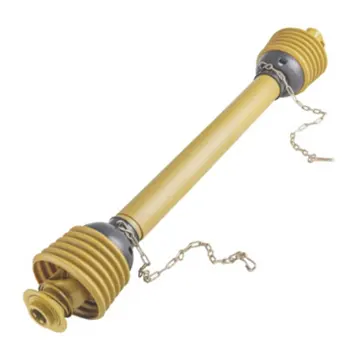
Universal Joint (U-Joint) Kits
Comprehensive standalone cross-journal kits equipped with grease zerks and high-strength circlips, enabling rapid field replacements for global machinery brands.

Cast Iron V-Belt Pulleys
Engineered for high-RPM planter vacuum fans. These pulleys undergo strict static and dynamic balancing tests to suppress belt flutter and maximize airflow.
Industry Insights & Technical Deep-Dive Troubleshooting (FAQ)
Q1: Our planter operates in severely rocky hardpan, and we are constantly snapping shear bolts. What is the engineering fix?
Engineering Insight: While shear bolts effectively protect against absolute mechanical lockups, frequent shearing indicates your implement’s operational torque spikes regularly exceed the bolt’s yield strength. We strongly advise upgrading to an adjustable Friction Clutch. This design allows the driveline to slip momentarily during impact, dissipating the shock load without requiring you to halt the tractor and manually replace a bolt every hour.
Q2: Why do you claim your CV joints can handle 80-degree angles? Aren’t standard joints sufficient?
Engineering Insight: A standard single U-joint cannot safely operate continuously above a 25-degree deflection. Pushing past this causes unequal angular velocity, resulting in violent shuttering that tears gearboxes apart. Our 80-degree Wide Angle Constant Velocity (CV) configuration links two cross journals with a central centering disc. This geometry perfectly cancels out velocity fluctuations, making it mandatory for large planters executing tight headland maneuvers without disengaging power.
Q3: How do I select the optimal profile tube geometry? Should I use Lemon or Involute Spline tubes?
Engineering Insight: The Lemon profile is the undisputed standard for general agricultural planters due to its excellent torsional strength and cost-efficiency. However, if your application involves massive torque combined with very short telescopic travel (where friction binding is a threat), a multi-tooth Involute Spline tube is superior. It offers maximum surface contact area and exceptionally low sliding friction under load.
Q4: Is it safe for a field mechanic to cut down a driveline that is too long?
Engineering Insight: Yes, it is standard practice to cut a shaft to fit. However, you must cut exactly the same length from both the inner steel tube and the outer steel tube, as well as the plastic safety shields. Following the cut, you must aggressively file away all sharp metal burrs and completely clean the interior to prevent metal shavings from destroying the sliding action. Re-grease heavily before assembly.
Q5: Can we continue operating if the plastic safety guard is cracked but the metal shaft is fine?
Engineering Insight: Absolutely not. Operating an exposed rotational mass at 540 or 1000 RPM is a lethal hazard. Loose clothing can become entangled in a fraction of a second, causing catastrophic dismemberment or fatality. Furthermore, damaged shields allow dirt and water to attack the steel components directly. A compromised safety shield must be replaced immediately with a CE-compliant assembly.
Q6: What is the exact lubrication interval required to prevent bearing failure?
Engineering Insight: Under normal field conditions, the standard U-joint cross journals and the sliding profile tubes require fresh grease every 8 operational hours (essentially prior to every daily shift). Wide Angle CV joints generate significantly more internal heat and friction, demanding lubrication every 4 hours. The nylon bearings supporting the safety shields should be greased every 40 to 50 hours to prevent binding.
Q7: How do your products withstand the heavy salt fog corrosion typical in coastal agricultural zones?
Engineering Insight: Standard painted steel deteriorates rapidly in humid, saline coastal environments in Southeast Asia. For these harsh sectors, we replace standard powder coating with advanced Dacromet anti-corrosion treatments or industrial hot-dip galvanizing. These engineered surface technologies push our salt spray endurance past 500 hours without a trace of red rust.
Q8: Besides 540 RPM, how does the 1000 RPM standard alter the mechanical requirements?
Engineering Insight: A 1000 RPM output (usually interfaced via a 21-spline stub) transmits power at nearly double the rotational speed, altering the physics. It allows for a smaller physical shaft diameter to transmit the same horsepower but exponentially increases the system’s sensitivity to vibration. We counter this by elevating our dynamic balancing to the ultra-precise G2.5 standard for all high-speed drivelines.
Q9: If a rock jams the implement and snaps the cross journal, is that considered a metallurgical defect in your product?
Engineering Insight: No. The driveshaft serves as the transmission bridge; it is explicitly not designed to absorb infinite rigid impact loads. A shattered journal cross invariably indicates a failure of the overload protection system. The clutch was either miscalibrated, rusted solid due to neglected maintenance, or missing entirely. Ensuring your slip clutch or shear bolt is functional before the season begins is paramount.
Q10: We want to retrofit an auxiliary hydraulic pump onto our planter. Can we pull power from the existing driveline?
Engineering Insight: Yes, this is an advanced modification. Instead of stressing a single shaft, we recommend installing a Through-Shaft agricultural gearbox as a junction point. We will engineer two shafts in series: a heavy-duty primary shaft to manage the shock from the tractor to the gearbox, and a shorter, precision-balanced secondary shaft to smoothly run the hydraulic pump, isolating it from soil-induced resonance.
Zhejiang Jiukai: The Global Genesis of Agricultural Powertrains
From a raw ingot of 20CrMnTi steel undergoing multi-axis CNC lathing, to the violent, mud-soaked reality of an Asian rice paddy—our manufacturing depth is absolute. While we maintain a massive inventory of standardized components ready for immediate dispatch, our true technical dominance lies in our infinite non-standard customization capabilities.
Whether your project requires exotic flange connections, extreme-temperature metallurgy, or reverse-engineering from a destroyed field sample, our veteran engineering corps is standing by. Submit your CAD blueprints, operational parameters, or physical samples, and we will forge a powertrain solution that redefines reliability.

Transmit Your Blueprints for an Expert Engineering Quote!
Navigate back to our Home Hub to explore the frontier of transmission technology.