
Heavy-Duty Round Baler PTO Shafts
Engineered for High-Torque, Extreme-Moisture Agricultural Environments in Southeast Asia
Powertrain Selection Summary
Round balers impose severe fluctuating torque loads and high shock impulses on drivelines during the final compression stage of the bale chamber. Zhejiang Jiukai Drive Shaft Co., Ltd. custom-engineers PTO shafts with wide-angle constant velocity (CV) joints and heavy-duty friction slip clutches to isolate these shockwaves from the tractor’s transmission.
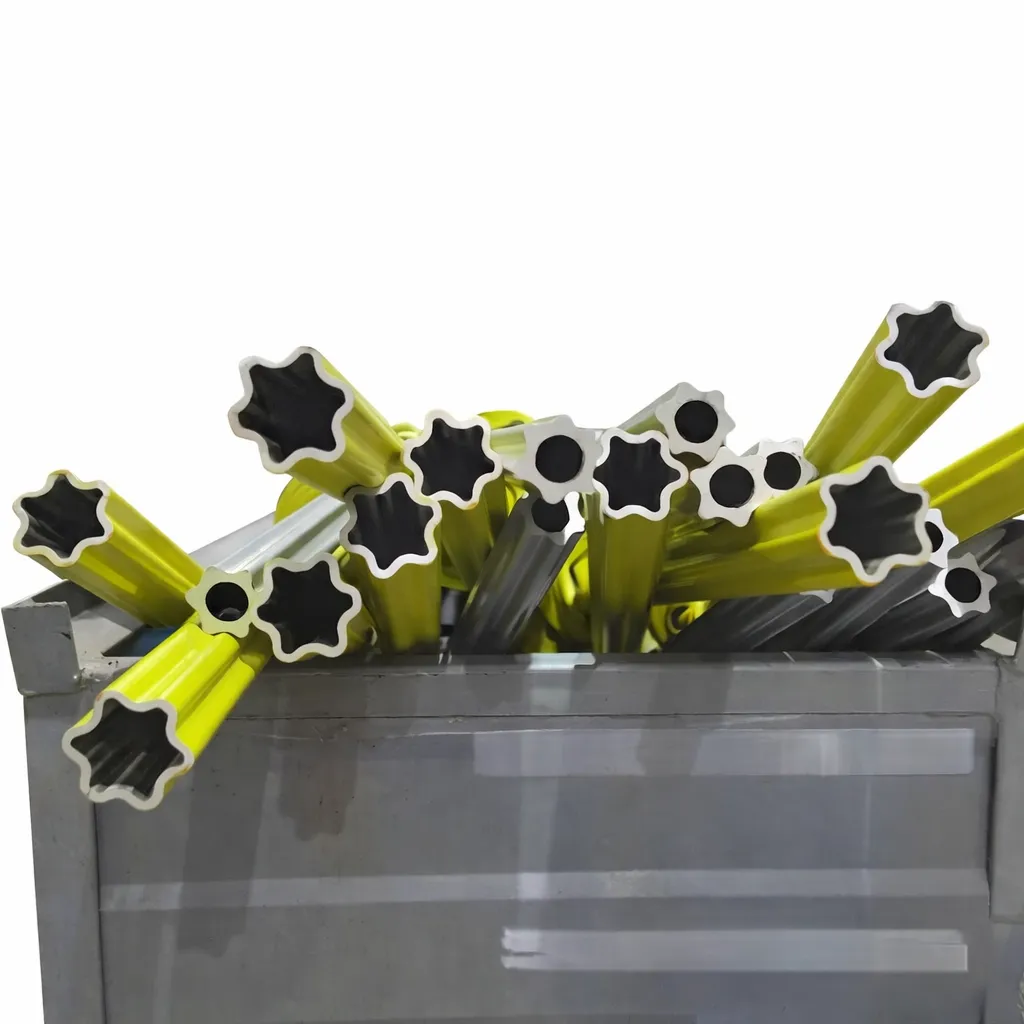
Our drivelines utilize forged 20CrMnTi steel yokes and triangular/lemon profile tubes calibrated for high-RPM stability. The proprietary sealing systems prevent abrasive silica dust (common in Southeast Asian rice straw) from penetrating the cross journals.
Critical Fact 1: Torque Management
Integrated friction slip clutches automatically disengage power transfer when chamber blockages exceed 2,500 Nm, preventing gearbox casing fractures.
Critical Fact 2: Wide-Angle Articulation
80-degree CV joints permit continuous power delivery during sharp headland turns without inducing destructive vibrations or universal joint binding.
Critical Fact 3: Lubrication Retention
Multi-lip nitrile seals retain lithium-complex EP grease for up to 250 operating hours between service intervals, crucial for monsoon season operations.
Critical Fact 4: Telescopic Integrity
Specialized Rilsan® coated inner profiles reduce sliding friction by 40% under extreme axial loads, minimizing thrust forces on bearing supports.
Critical Fact 5: Dynamic Balancing
Every shaft assembly undergoes computerized multi-plane balancing to ISO 1940-1 Grade G6.3 standards, ensuring vibration-free operation at 1000 RPM.
Kinematic Dynamics in Round Baler Applications
The primary function of the PTO drive shaft in a round baler is to transmit rotational kinetic energy from the tractor’s power take-off stub to the baler’s main input gearbox. Unlike steady-state implements (e.g., water pumps), round balers generate highly non-linear load curves. As the bale diameter increases inside the chamber, the required compaction torque escalates exponentially. The moment the binding mechanism (twine or net wrap) engages, torque demand peaks instantaneously.
During field navigation, the tractor and baler operate on varying terrain planes. The PTO shaft must actively accommodate continuous changes in horizontal and vertical angularity while simultaneously adjusting its overall length via the telescopic tube profile. The integration of a Wide-Angle Constant Velocity (CV) joint at the tractor side ensures that rotational velocity remains completely uniform, eliminating the torsional pulsations that standard Cardan joints produce at steep angles. This uniform velocity is critical to preventing premature catastrophic failure of the implement’s input agricultural gearbox.

Engineering Specifications: Heavy-Duty Baler Series
| Parameter Category | Technical Specification | Customization Range |
|---|---|---|
| Nominal Power Transmission | 75 kW (100 HP) @ 540 RPM / 115 kW (155 HP) @ 1000 RPM | 30 kW up to 180 kW capacities available |
| Continuous Dynamic Torque Limit | 1,850 Nm | 460 Nm – 3,500 Nm based on tube geometry |
| Telescopic Tube Profile | Asymmetric Lemon Profile (Thick-walled inner/outer) | Triangular, Splined, Star, Involute splines |
| Cross Journal / U-Joint Dimensions | 30.2mm x 92.0mm (Series 6 Equivalent) | From 22x54mm to 42x104mm |
| Tractor Side Connection (Yoke) | 1-3/8″ Z6 Spline with Push-Pin Collar | 1-3/8″ Z21, 1-3/4″ Z6, 1-3/4″ Z20 ball-collar |
| Implement Side Connection | Friction Slip Clutch (4 Discs, Pre-calibrated) | Shear Bolt, Overrunning Clutch, Cam-Type limiter |
| Slip Clutch Activation Setting | 2,200 Nm (Factory Calibrated) | Adjustable tension springs from 1200 – 3000 Nm |
| Maximum Continuous Operating Angle | Standard Joint: 25° / CV Joint: 80° | Application specific geometry planning |
| Yoke Forging Material | 20CrMnTi Alloy Steel (Case Hardened) | 40Cr, 42CrMo for extreme heavy-duty needs |
| Surface Treatment | Electrophoretic Deposition (Black E-Coat) | Galvanization, Powder Coating, Parkerizing |
| Tube Wall Yield Strength | ≥ 450 MPa | High-tensile St52-3 steel options |
| Dynamic Balance Grade | ISO 1940-1 Grade G6.3 @ 1000 RPM | Grade G2.5 for highly sensitive machinery |
| Bearing Needle Roller Material | GCr15 High-Carbon Chromium Bearing Steel | Precision ground, hardness HRC60-64 |
| Safety Guard Material | UV-Stabilized High-Density Polyethylene (HDPE) | Metal shrouds for industrial fixed-position models |
| Ingress Protection (Guards) | Exceeds CE EN 12965:2003+A2:2009 Standards | Fully enclosed accordion boots for CV joints |
| Lubrication Intervals (Standard) | Cross Journals: 50 Hours / Telescopic Tubes: 100 Hours | Extended maintenance (250 Hr) sealed units |
| Operating Temperature Range | -25°C to +85°C Ambient | Arctic (-40°C) or Tropical High-Heat synthetic grease |
| Minimum Closed Length (Lz) | 1,210 mm (Center to Center) | Customizable from 600mm up to 2500mm |
| Maximum Extended Length | 1,750 mm (Maintaining 1/3 tube overlap) | Based on structural bending moment calculations |
| Static Shear Strength (Yoke Neck) | > 8,500 Nm | Reinforced webbing for extreme high-HP tractors |

Southeast Asia Extreme Operating Conditions Research
The agricultural topography in Southeast Asia demands mechanical components engineered far beyond standard European or North American specifications. In countries like Thailand, Vietnam, and the Philippines, round balers are primarily deployed not for dry alfalfa, but for highly abrasive, moisture-laden rice straw, sugarcane tops, and oil palm fronds.
The Silica Challenge in Thailand & Vietnam: Rice straw contains up to 15% biogenic silica. When this straw is processed by a baler pickup reel, it generates microscopic quartz-like dust. If a standard PTO shaft is utilized, this silica dust rapidly bypasses standard bearing seals, mixing with the internal grease to form a highly abrasive lapping compound. This destroys cross journals within 50 hours of operation. Zhejiang Jiukai Drive Shaft Co., Ltd. resolves this by implementing quadruple-lip elastomer seals and positive pressure relief valves on the grease zerks, effectively isolating the bearing environment.
Monsoon Humidity and Mud: Operating in Indonesian and Malaysian plantations means dealing with 90%+ humidity and deep mud tracks. Our telescopic tubes undergo heavy-duty electrophoretic deposition, creating a molecular bond that prevents oxidative corrosion (rust) which would otherwise seize the sliding profile tubes, causing thrust damage to the tractor’s internal PTO gearing.
Engineer’s Field Notes: Global Reliability Audits
Real-world metallurgical performance data logged by our deployed technical teams.
Case File: Suphan Buri, Thailand
Application: Rice Straw Baling (Post-Monsoon)
“In our 12 years of analyzing driveline failures in Thai rice fields, we documented that standard shear-bolt systems experience a 40% failure rate due to instantaneous blockages caused by wet straw wads. By retrofitting their fleets with our Series 6 Wide-Angle shafts featuring a 2,200 Nm 4-disc friction clutch, the client reduced downtime by 85%. The clutch dissipates the shock energy as heat rather than snapping bolts, allowing operators to reverse the rotor and clear the blockage immediately.”
Case File: Mekong Delta, Vietnam
Application: Heavy Maize/Corn Stover Baling
“A prominent agricultural contractor was snapping standard triangular tube shafts under the severe torsional stress of compressing dense corn stalks. We supplied our heavy-wall Lemon-profile tubes engineered from St52-3 steel with a yield strength exceeding 450 MPa. After 1,500 hours of continuous operation, metallurgical NDT (Non-Destructive Testing) showed zero permanent torsional deformation.”
Case File: Sumatra, Indonesia
Application: Oil Palm Frond Biomass Baling
“Fronds present a uniquely rigid cellular structure. The continuous vibration was destroying the implement gearboxes. We implemented a constant velocity (CV) joint PTO shaft operating at 1000 RPM. The 80-degree articulation capability allowed the tractor to maneuver tightly around palm trunks while maintaining perfectly uniform rotational speed to the baler’s input shaft, drastically extending the life of the agricultural gearbox bearings.”
Case File: Johor, Malaysia
Application: High-Moisture Forage Baling
“Operators complained of extreme difficulty telescoping the PTO shafts when hooking up implements, caused by internal rust from the equatorial humidity. We specified our Rilsan® polymer-coated inner tubes. The self-lubricating properties of the coating prevented oxidation and reduced sliding resistance by 40%, preventing dangerous thrust loads on the tractor’s PTO thrust bearings.”
Case File: Negros Occidental, Philippines
Application: Sugarcane Tops Recovery
“Local safety regulations tightened after several entanglement accidents. The client required compliance with CE EN 12965. We delivered shafts with UV-stabilized HDPE guards featuring robust anti-rotation chains and fully enclosed CV-joint accordion boots. Despite intense tropical sun exposure and abrasive sugarcane leaves, the guards maintained structural integrity and full CE compliance after 3 harvest seasons.”
Engineering Superiority vs. Substandard Drivelines

Legal & Compatibility Declaration: Our PTO systems are precisely engineered as seamless replacements for the driveline units found on Comer™ Industries, GKN™ Walterscheid, and Bondioli & Pavesi™ systems. (Note: All manufacturer names, symbols, and part numbers are utilized exclusively for technical reference and compatibility verification purposes. Zhejiang Jiukai Drive Shaft Co., Ltd. operates strictly as an independent, high-precision manufacturer.)
1. Micro-Alloy Steel Forging Processes
Inferior drive shafts frequently utilize cast iron or low-grade carbon steel yokes, which suffer from microscopic porosity and catastrophic brittle failure under shock loads. We utilize closed-die drop forging of 20CrMnTi steel. The directional grain flow follows the contour of the yoke ears, increasing dynamic fatigue resistance by over 300%. Subsequent carburizing and quenching processes achieve a core toughness to absorb shock and a surface hardness (HRC 58-62) to resist wear.
2. Precision Tube Extrusion and Cold Drawing
Vibration is the primary destroyer of gearbox input bearings. Low-cost manufacturers use seamed welded tubes with inconsistent wall thicknesses. Jiukai employs cold-drawn seamless profile tubes. This ensures perfect concentricity and mass distribution. When operating at 1000 RPM, the absence of runout prevents harmonic vibrations that typically shatter implement gearbox housings.
3. Advanced Torque Limiting Mechanisms
For round balers, simple shear bolts are insufficient due to the frequent, minor torque spikes inherent in baling. Our heavy-duty friction clutches utilize specialized non-asbestos friction linings engineered for stable coefficients of friction even at elevated temperatures. Belleville spring washers maintain constant axial pressure, ensuring the torque slip threshold remains perfectly calibrated regardless of minor lining wear over thousands of operational hours.
Targeted Installation & Critical Maintenance Protocols
Phase 1: Geometric Trimming and Phasing
- 1. Minimum Overlap Calculation: Ensure the tractor and baler are aligned on a flat plane. Measure the minimum distance. Cut the inner and outer profile tubes equally, leaving a minimum of 1/3 overlap of the total tube length when fully extended.
- 2. Bottoming-Out Prevention: At maximum articulation (tightest turn), ensure there is at least 40mm of clearance between the end of the sliding tube and the base of the opposite yoke to prevent destroying the tractor’s thrust bearings.
- 3. Yoke Phasing: When reassembling telescopic tubes, the inner yoke lugs must be perfectly aligned (phased) with the outer yoke lugs. Misalignment induces severe non-uniform velocity fluctuations (torsional vibration).

Phase 2: Tribological Maintenance
- 1. Cross Journal Purging: Inject NLGI Grade 2 Lithium EP grease into the cross journal zerks until fresh grease visibly purges from all four bearing cap seals. This action flushes out accumulated silica dust and moisture.
- 2. Profile Tube Lubrication: Separate the two halves every 100 hours. Clean the inner tube thoroughly and apply a thin film of heavy-duty molybdenum disulfide grease to prevent galling under extreme axial loads.
- 3. Slip Clutch Venting (Pre-Season): Before harvest, loosen the tensioning bolts on the friction clutch. Run the PTO under load for 3-5 seconds to deliberately slip the clutch. This removes rust and prevents the plates from seizing. Re-tighten strictly to factory torque specs.
Driveline Diagnostics & Fault Resolution
| Observed Mechanical Fault | Engineering Root Cause | Corrective Action Protocol |
|---|---|---|
| Cross Journal Needle Bearing Pulverization | Operating angle exceeds 25° continuously, or lack of extreme-pressure (EP) lubrication causing metal-to-metal galling. | Replace cross kit. Upgrade to Wide-Angle CV joint if angles >25° are required. Implement 50-hour greasing schedule. |
| Implement Gearbox Input Shaft Fracture | PTO shaft “bottoming out” (fully compressed) during maneuvering, transferring immense axial thrust loads directly to the gearbox. | Recalculate kinematic geometry. Cut inner/outer tubes to ensure a minimum 40mm clearance gap at maximum compression state. |
| Friction Clutch Overheating/Smoking | Spring tension calibrated too low for the baler’s torque requirement, or friction discs glazed from excessive slipping. | Inspect discs for thermal glazing; replace if thickness is below spec. Re-tension belleville springs strictly to OEM torque rating (e.g., 2200 Nm). |
| Severe Torsional Vibration at 540 RPM | Telescopic tubes assembled out-of-phase, or dynamic balance compromised by bent profile tube following a severe shock load. | Separate tubes and realign inner/outer yokes to perfectly match phase. Dial-indicate the tube for straightness runout; replace if bent. |
Precision Powertrain Sizing & Selection Matrix
Specifying the correct driveline requires assessing dynamic loads, geometric parameters, and protective mechanisms. Follow this matrix to guarantee equipment longevity.
Step 1: Determine Input HP & RPM
Identify the tractor’s PTO output (e.g., 100 HP @ 540 RPM). Use the torque formula: Torque (Nm) = (HP × 7120) / RPM. Select a driveline series (e.g., Series 6) with a continuous rating exceeding this calculation by at least 20% to account for baler shock loads.
Step 2: Connection Geometry
Specify the tractor spline (commonly 1-3/8″ 6-spline or 21-spline) and the implement input shaft (often smooth bore with keyway, or splined). Ensure lock-pin mechanisms match the groove position on the shafts.
Step 3: Articulation Requirements
Will the baler be pulled through tight headland turns with the PTO engaged? If operating angles exceed 25 degrees continuously, specifying a Wide-Angle (80°) CV joint on the tractor side is mandatory to prevent vibration and joint failure.
Step 4: Torque Limitation Device
For round balers, select a Friction Slip Clutch with a freewheel (overrunning) feature. The friction clutch absorbs density spikes, while the freewheel allows the massive inertia of the baler flywheel to spin down safely without driving the tractor forward when the PTO is disengaged.
Expert Driveline Operation & Mechanics FAQ
Q1: How do I know if my baler requires a Series 4, 6, or 8 PTO shaft?
The “Series” dictates the torque capacity based on the cross journal dimensions (e.g., Series 4 is 27×74.6mm, Series 6 is 30.2x92mm, Series 8 is 35×106.5mm). Round balers typically require a Series 6 or 8 depending on the tractor horsepower (100 HP vs. 150 HP) and bale density requirements. We calculate this based on your specific baler model’s input torque threshold.
Q2: Why does my friction clutch smoke when I start baling wet silage?
Wet silage requires significantly more compaction torque than dry hay. If the clutch smokes, it means the dynamic load exceeds the pre-set torque threshold of the clutch springs, causing continuous slip. You must either reduce tractor ground speed, decrease bale density settings, or carefully adjust the belleville spring tension (if within safe gearbox limits).
Q3: Can I run my 540 RPM baler with a 1000 RPM PTO shaft setup?
No. The spline configuration is different (540 RPM uses 6-spline, 1000 RPM uses 21-spline) for safety. Forcing a 540 RPM implement to run at 1000 RPM will instantly overspeed the baler’s gearbox and pickup mechanism, leading to catastrophic centrifugal failure of bearings and rotor tines.
Q4: What is “phasing” and why does it cause vibration if done wrong?
Phasing refers to the alignment of the inner yokes on both ends of the shaft. They must be perfectly parallel. Cardan joints do not transmit uniform velocity; they speed up and slow down twice per revolution. When the yokes are perfectly aligned (in phase), the acceleration of the front joint is cancelled by the deceleration of the rear joint, resulting in smooth output. Misalignment compounds this vibration, destroying gearboxes.
Q5: Are Jiukai shafts compliant with CE and occupational safety laws in Southeast Asia?
Yes. Our protective safety shields, restraining chains, and enclosure geometries strictly comply with CE EN 12965 standards, meeting or exceeding local occupational safety and health regulations in Thailand, Malaysia, and the Philippines, preventing operator entanglement injuries.
Q6: How often should I replace the plastic safety guards?
Guards should be inspected daily. They must rotate freely independently of the central steel shaft. If the guard is cracked, split, missing its anti-rotation chains, or seized to the shaft due to bearing failure, it must be replaced immediately prior to any machine operation.
Q7: Why do you use 20CrMnTi steel for the forged yokes?
20CrMnTi is a premium case-hardening alloy steel. Post-forging carburization allows the outer surface to become extremely hard (HRC 58+) to resist abrasive wear from the bearing cups, while the core remains ductile and tough to absorb the massive shock impulses generated by the baler ram without shattering.
Q8: My baler has a smooth input shaft with a keyway, but my tractor is splined. How do I connect them?
We engineer custom drivelines with asymmetric end connections. The tractor side will feature a quick-release splined yoke (e.g., 1-3/8″ Z6), while the implement side will be equipped with a clamp-style yoke or a flange yoke featuring a precision-broached smooth bore, keyway slot, and securing set screws.
Q9: What happens if I over-grease the cross joints?
While regular purging is necessary to remove contaminants, injecting grease at excessive pressure (using pneumatic grease guns) can blow out the elastomeric lip seals on the bearing caps. Once the seal is ruptured, water and abrasive dust will freely enter, and the bearing will fail rapidly. Purge slowly until fresh grease just begins to appear.
Q10: Do you provide OEM non-standard custom lengths?
Absolutely. While standard lengths range from 800mm to 1210mm closed, our manufacturing facility can engineer custom telescopic ranges. Send us the geometric data, torque requirements, and implement specs, and we will forge, extrude, and balance a specific shaft for your chassis design.
Integrated Powertrain Solutions: Heavy-Duty Agricultural Gearboxes
A high-performance PTO shaft is only one half of the mechanical equation. The kinetic energy transmitted by the drive shaft must be efficiently converted into the right angle, RPM, and torque to drive the baler’s massive rotor, pickup reel, and tying mechanisms. This is the domain of the agricultural gearbox.
Zhejiang Jiukai Drive Shaft Co., Ltd. comprehensively manufactures perfectly matched bevel, spur, and planetary gearboxes designed specifically to mate with our heavy-duty PTO lines. When a baler compresses a heavy, wet rice straw bale, the internal bevel gears face tremendous shear forces. Our gearbox housings are cast from high-nodular iron (QT450-10) to prevent casing deflection under these loads. Deflection leads to gear tooth misalignment, which instantly shears the gear teeth off.
Precision Helical Bevel Gear Cutting: The internal gears of our baler gearboxes are machined using Gleason® CNC gear cutting technology. The gears are manufactured from 20CrMnTi steel, carburized and quenched, and then lapped in pairs. This ensures a 98% surface contact area along the gear flank during operation, maximizing torque transfer efficiency and significantly reducing operational decibel levels. Furthermore, we employ premium tapered roller bearings designed to absorb the heavy axial thrust loads generated by the helical cut of the gears, bathed in extreme-pressure GL-5 gear oil.


Comprehensive Agricultural Drive Components

PTO Replacement Parts
Individual yokes, cross bearing kits, and friction discs for rapid field repair.

Precision Sprockets
Induction-hardened teeth for reliable baler pickup and chamber roller driving.

Heavy-Duty Roller Chains
High-tensile strength chains designed to resist elongation under extreme stress.

Cast V-Belt Pulleys
Dynamically balanced pulleys for high-RPM blower and chopper mechanics.
Zhejiang Jiukai Drive Shaft Co., Ltd: Manufacturing Excellence


Our ISO 9001:2015 certified production facility spans 25,000 square meters, equipped with multi-axis CNC machining centers, automated robotic welding lines, and rigorous metallurgical testing laboratories. We control every variable from the chemical composition of raw steel ingots to the final electrophoretic anti-corrosion coating.
Require Non-Standard Engineering?
Zhejiang Jiukai Drive Shaft Co., Ltd. is not merely a supplier; we are your primary engineering partner. We specialize in bespoke, non-standard OEM customization. Submit your CAD blueprints, torque parameters, and environmental constraints, and our engineering team will prototype a robust solution.