
产品描述
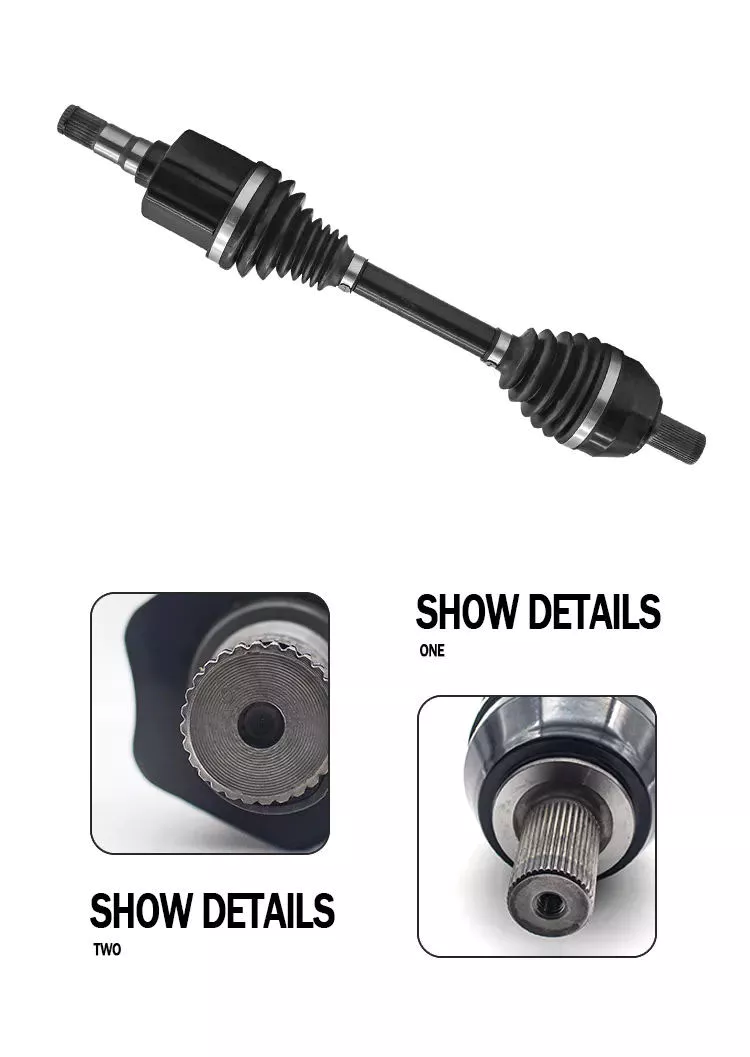
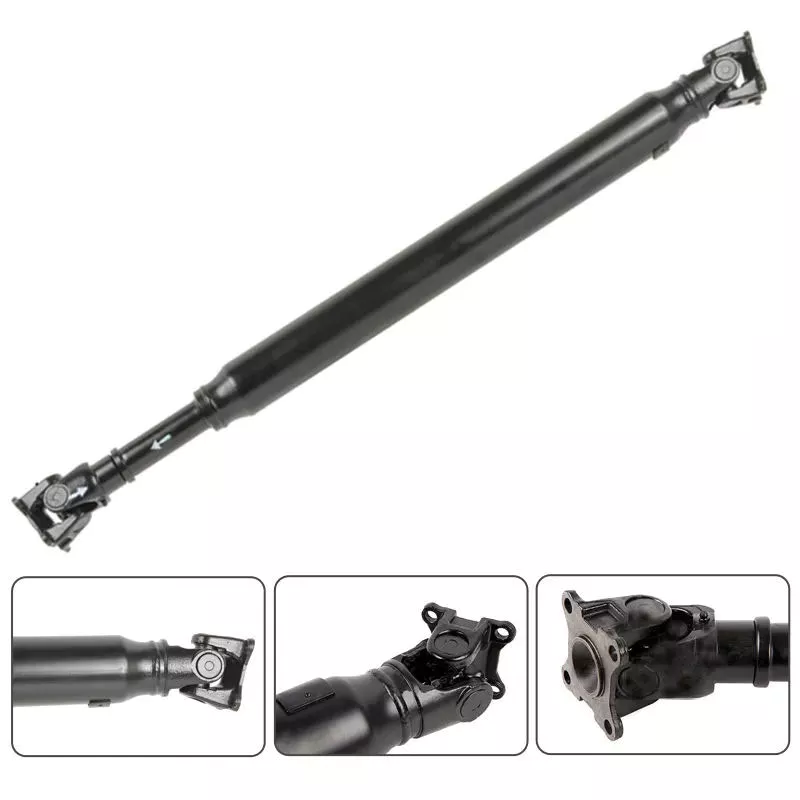
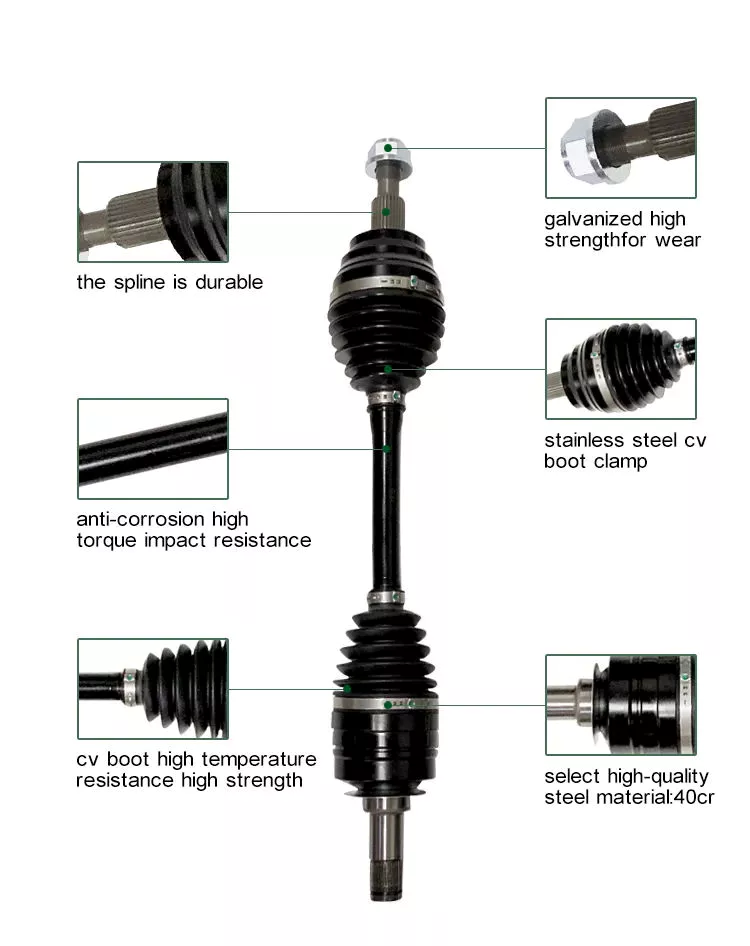
Tractor Pto Driveshaft Driveline Factory Hollow Spline Cardan Adapter Universal Joint Yoke Flexible Front Prop Rear CV Axle Propeller Automobile Drive Shaft
产品描述
Agricultural truck universal joint steering
PTO Shaft
| Function of PTO Shaft | Drive Shaft Parts & Power Transmission |
| Usage of PTO Shaft | Kinds of Tractors & Farm Implements |
| Yoke Types for PTO Shaft | Double push pin, Bolt pins, Split pins, Pushpin, Quick release, Ball attachment, Collar….. |
| Processing Of Yoke | Forging |
| PTO Shaft Plastic Cover | YW; BW; YS; BS; Etc |
| Colors of PTO Shaft | Green; Orange; Yellow; Black Ect. |
| PTO Shaft Series | T1-T10; L1-L6;S6-S10;10HP-150HP with SA,RA,SB,SFF,WA,CV Etc |
| Tube Types for PTO Shaft | Lemon, Triangular, Star, Square, Hexangular, Spline, Special Ect |
| Processing Of Tube | Cold drawn |
| Spline Types for PTO Shaft | 1 1/8″ Z6;1 3/8″ Z6; 1 3/8″ Z21 ;1 3/4″ Z20; 1 3/4″ Z6; 8-38*32*6 8-42*36*7; 8-48*42*8; |
We also sell accessories for the pto shaft, including :
Yoke: CV socket yoke, CV weld yoke, flange yoke, end yoke, weld yoke, slip yoke
CV center housing, tube, spline, CV socket flange, u-joint, dust cap
Light vehicle drive line
Our products can be used for transmission shafts of the following brands
Toyota, Mitsubishi, Nissan, Isu zu, Suzuki, Dafa, Honda, Hyundai, Mazda, Fiat, Re nault, Kia, Dacia, Ford. Dodge, Land Rover, Peu geot, Volkswagen Audi, BMW Benz Volvo, Russian models
Gear shaft
公司简介
Related Products
Application:
Company information:
| 材料: | Carbon Steel |
|---|---|
| Load: | Drive Shaft |
| Stiffness & Flexibility: | Stiffness / Rigid Axle |
| Journal Diameter Dimensional Accuracy: | IT6-IT9 |
| Axis Shape: | Straight Shaft |
| Shaft Shape: | Real Axis |
| 示例: |
US$ 38/Piece
1 件(最低订购量) | |
|---|
How do manufacturers ensure the compatibility of PTO shafts with different equipment?
Manufacturers employ various measures to ensure the compatibility of PTO (Power Take-Off) shafts with different equipment. Compatibility is crucial to ensure that PTO shafts can effectively transfer power from the power source to the driven machinery without compromising performance, safety, or ease of use. Here’s a detailed explanation of how manufacturers ensure compatibility:
1. Standardization: PTO shafts are designed and manufactured based on standardized specifications. These specifications outline the essential parameters such as shaft dimensions, spline sizes, torque ratings, and safety requirements. By adhering to standardized designs, manufacturers ensure that PTO shafts are compatible with a wide range of equipment that meets the same standards. Standardization allows for interchangeability, meaning that PTO shafts from one manufacturer can be used with equipment from another manufacturer as long as they conform to the same specifications.
2. Collaboration with Equipment Manufacturers: PTO shaft manufacturers often collaborate closely with equipment manufacturers to ensure compatibility. They work together to understand the specific requirements of the equipment and design PTO shafts that seamlessly integrate with the machinery. This collaboration may involve sharing technical specifications, conducting joint testing, and exchanging feedback. By working in partnership, manufacturers can address any compatibility issues early in the design and development process, resulting in PTO shafts that are tailored to the equipment’s needs.
3. Customization Options: PTO shaft manufacturers offer customization options to accommodate different equipment configurations. They provide flexibility in terms of shaft length, spline sizes, yoke designs, and coupling mechanisms. Equipment manufacturers can specify the required parameters, and the PTO shafts can be customized accordingly. This ensures that the PTO shafts precisely match the equipment’s power input/output requirements and connection methods, guaranteeing compatibility and efficient power transfer.
4. Testing and Validation: Manufacturers conduct rigorous testing and validation processes to ensure the compatibility and performance of PTO shafts. They subject the shafts to various tests, including torque testing, rotational speed testing, and durability testing. These tests verify that the PTO shafts can handle the expected power loads and operating conditions without failure. By validating the performance of the PTO shafts, manufacturers can ensure that they are compatible with a wide range of equipment and can reliably transfer power under different operating scenarios.
5. Compliance with Industry Standards: PTO shaft manufacturers adhere to industry standards and regulations to ensure compatibility. Organizations such as the American Society of Agricultural and Biological Engineers (ASABE) establish safety and performance standards for PTO shafts. Manufacturers design and produce their shafts in accordance with these standards, ensuring that their products meet the necessary requirements for compatibility and safety. Compliance with industry standards provides assurance to equipment manufacturers and end-users that the PTO shafts are compatible and suitable for use with different equipment.
6. Documentation and Guidelines: Manufacturers provide comprehensive documentation and guidelines to assist equipment manufacturers and end-users in ensuring compatibility. This documentation includes technical specifications, installation instructions, maintenance guidelines, and safety recommendations. The documentation helps equipment manufacturers select the appropriate PTO shaft for their equipment and provides guidance on proper installation and use. By following the manufacturer’s guidelines, equipment manufacturers can ensure compatibility and optimize the performance of the PTO shafts.
7. Ongoing Research and Development: PTO shaft manufacturers continuously invest in research and development to enhance compatibility with different equipment. They stay updated with industry trends, technological advancements, and evolving equipment requirements. This ongoing research and development enable manufacturers to improve the design, materials, and features of PTO shafts, ensuring compatibility with the latest equipment innovations and addressing any compatibility challenges that may arise.
By employing standardization, collaborating with equipment manufacturers, offering customization options, conducting thorough testing, complying with industry standards, providing documentation and guidelines, and investing in research and development, manufacturers ensure the compatibility of PTO shafts with different equipment. This compatibility allows for seamless integration, efficient power transfer, and optimal performance across a wide range of machinery and equipment in various industries.
Are there any limitations or disadvantages associated with PTO shafts?
While PTO (Power Take-Off) shafts offer numerous advantages in terms of power transfer and versatility, they also have certain limitations and disadvantages. It’s important to consider these factors when using PTO shafts to ensure safe and efficient operation. Here’s a detailed explanation of some limitations and disadvantages associated with PTO shafts:
1. Safety Hazards: One of the primary concerns with PTO shafts is the potential for safety hazards. PTO shafts rotate at high speeds and can pose a significant risk if not properly guarded or handled. Accidental contact with an exposed or inadequately shielded PTO shaft can result in severe injuries, including entanglement, amputation, or even fatalities. It is crucial to follow safety guidelines, implement proper guarding, and ensure that operators are well-trained on safe handling practices to mitigate these risks.
2. Maintenance and Lubrication: PTO shafts require regular maintenance and lubrication to ensure optimal performance and longevity. The moving parts, such as universal joints and splines, need to be inspected, cleaned, and lubricated at recommended intervals. Neglecting maintenance can lead to premature wear, decreased efficiency, and potential failures. Proper maintenance practices, including regular inspections and timely lubrication, are essential to mitigate these issues.
3. Alignment and Angles: PTO shafts rely on proper alignment and angles to ensure efficient power transfer. Misalignment or excessive angles between the power source and driven machinery can cause increased wear and strain on the components, leading to premature failure. Ensuring proper alignment and angle adjustment, using adjustable sliding yokes or other means, is important to prevent excessive stress on the PTO shaft and associated equipment.
4. Length Limitations: PTO shafts have limitations on their maximum and minimum length due to engineering constraints. The telescoping design allows for some adjustment, but there is a practical limit to how much the shaft can extend or retract. If the distance between the power source and driven machinery exceeds the maximum or falls below the minimum length of the PTO shaft, alternative solutions or modifications may be required. In some cases, additional components such as drive shaft extensions or gearboxes may be necessary to bridge the distance.
5. Compatibility: While manufacturers strive to ensure compatibility, there can still be challenges in finding the right PTO shaft for specific equipment configurations. Equipment may have unique requirements in terms of spline sizes, torque ratings, or connection methods that may not be readily available or compatible with off-the-shelf PTO shafts. Customization may be required to address these compatibility issues, which can result in increased costs or lead times.
6. Noise and Vibrations: PTO shafts in operation can generate significant noise and vibrations, especially at higher speeds. This can be a nuisance for operators and may require additional measures to reduce noise levels or dampen vibrations. Excessive vibrations can also affect the overall performance and lifespan of the PTO shaft and connected equipment. Implementing vibration dampeners or using flexible couplings can help mitigate these issues.
7. Power Limits: PTO shafts have specific power limits based on their design, materials, and components. Exceeding these power limits can lead to premature wear, component failures, or even shaft breakage. It is crucial to understand and adhere to the recommended power ratings for PTO shafts to ensure safe and reliable operation. In some cases, upgrading to a higher-capacity PTO shaft or implementing additional power transmission components may be necessary to accommodate higher power requirements.
8. Complex Installation and Removal: Installing and removing PTO shafts can be a complex process, especially in confined spaces or when dealing with heavy equipment. It may require aligning splines, engaging couplings, and securing locking mechanisms. Improper installation or removal techniques can lead to damage to the shaft or associated equipment. Proper training, handling equipment, and following manufacturer guidelines are essential to simplify and ensure the safe installation and removal of PTO shafts.
Despite these limitations and disadvantages, PTO shafts remain widely used and valuable components for power transfer in various industries. By addressing these considerations and implementing proper safety measures, maintenance practices, and alignment procedures, the potential drawbacks of PTO shafts can be effectively mitigated, allowing for safe and efficient operation.
您能解释一下不同类型的动力输出轴及其应用吗?
动力输出轴(PTO轴)种类繁多,每种类型都针对特定的应用和要求而设计。不同类型的动力输出轴具有广泛的通用性和兼容性,可与各种机械和农具配合使用。以下是对最常见的几种动力输出轴及其应用的说明:
1. 标准动力输出轴: 标准动力输出轴(PTO轴),也称为花键轴,是农业和工业机械中最常用的类型。它由一根实心钢轴组成,轴上沿长度方向设有花键或凹槽。标准动力输出轴通常有六个花键,但也有四个或八个花键的变体。这种动力输出轴广泛应用于拖拉机和各种农机具,包括割草机、打捆机、耕耘机和旋转切割机。花键在动力源和被驱动机械之间提供牢固的连接,确保高效的动力传输。
2.剪切螺栓动力输出轴: 剪切螺栓式动力输出轴(PTO轴)设计有一项安全功能,可在过载或突发冲击时使轴分离,从而保护传动系统部件。这些动力输出轴采用剪切螺栓机构,将拖拉机的动力输出装置与被驱动机械连接起来。当负载过大或遇到突发阻力时,剪切螺栓会断裂,断开动力输出轴,防止传动系统损坏。剪切螺栓式动力输出轴常用于可能遇到突发障碍或高应力情况的设备,例如碎木机、树桩粉碎机和重型旋转切割机。
3.摩擦离合器动力输出轴: 摩擦式离合器动力输出轴(PTO轴)采用离合器机构,可实现动力传输的平稳接合和分离。这些PTO轴通常包含摩擦片和压盘,类似于传统车辆的离合器系统。摩擦式离合器允许操作人员逐步接合或分离动力传输,从而减少冲击载荷并最大限度地降低传动系统部件的磨损。摩擦式离合器PTO轴常用于需要精确控制动力接合的应用中,例如液压泵、发电机和工业搅拌机。
4. 等速(CV)动力输出轴: 等速(CV)动力输出轴,也称为等速轴,其设计能够适应较大的不对中角度而不影响动力传输。它们采用万向节机构,即使被驱动机械相对于动力源存在一定角度,也能实现平稳的动力传输。等速动力输出轴常用于机械需要较大运动范围或铰接角度的应用场合,例如铰接式装载机、伸缩臂叉装机和自走式喷雾器。
5.伸缩式动力输出轴: 伸缩式动力输出轴的长度可调,从而能够灵活适应不同的设备配置以及动力源与被驱动机械之间的距离。它由两根或多根同心轴组成,这些轴彼此滑动,可以根据需要伸缩动力输出轴。伸缩式动力输出轴常用于拖拉机动力输出装置与农具之间距离变化的应用场景,例如前置农具、吹雪机和自装式货车。伸缩式设计使其能够轻松适应不同的设备配置,并最大限度地降低动力输出轴拖地的风险。
6. 变速箱动力输出轴: 齿轮箱式动力输出轴旨在适应不同转速或旋转方向之间的动力传输。它们内置齿轮箱机构,可实现转速的降低或升高,以及旋转方向的改变。齿轮箱式动力输出轴常用于被驱动机械需要与拖拉机动力输出轴不同的转速或旋转方向的应用场合。例如,谷物螺旋输送机、饲料搅拌机以及需要特定速比或换向功能的工业设备。
需要注意的是,动力输出轴的类型及其具体应用可能因地区和行业因素而异。此外,某些机械或设备可能需要专用或定制的动力输出轴才能满足特定要求。
总而言之,不同类型的动力输出轴(PTO轴),例如标准型、剪切螺栓型、摩擦离合器型、等速(CV)型、伸缩型和齿轮箱型,具有广泛的适用性和与各种机械和农具的兼容性。每种类型的动力输出轴都旨在满足特定的需求,例如动力传输效率、安全性、平稳啮合、不对中容差、适应性以及速度/方向调节。了解不同类型的动力输出轴及其应用对于为目标机械选择合适的轴,并确保最佳性能和可靠性至关重要。

editor by CX 2023-10-03